Osteopathic Care for Ankle Pain and Sprains in Oakville
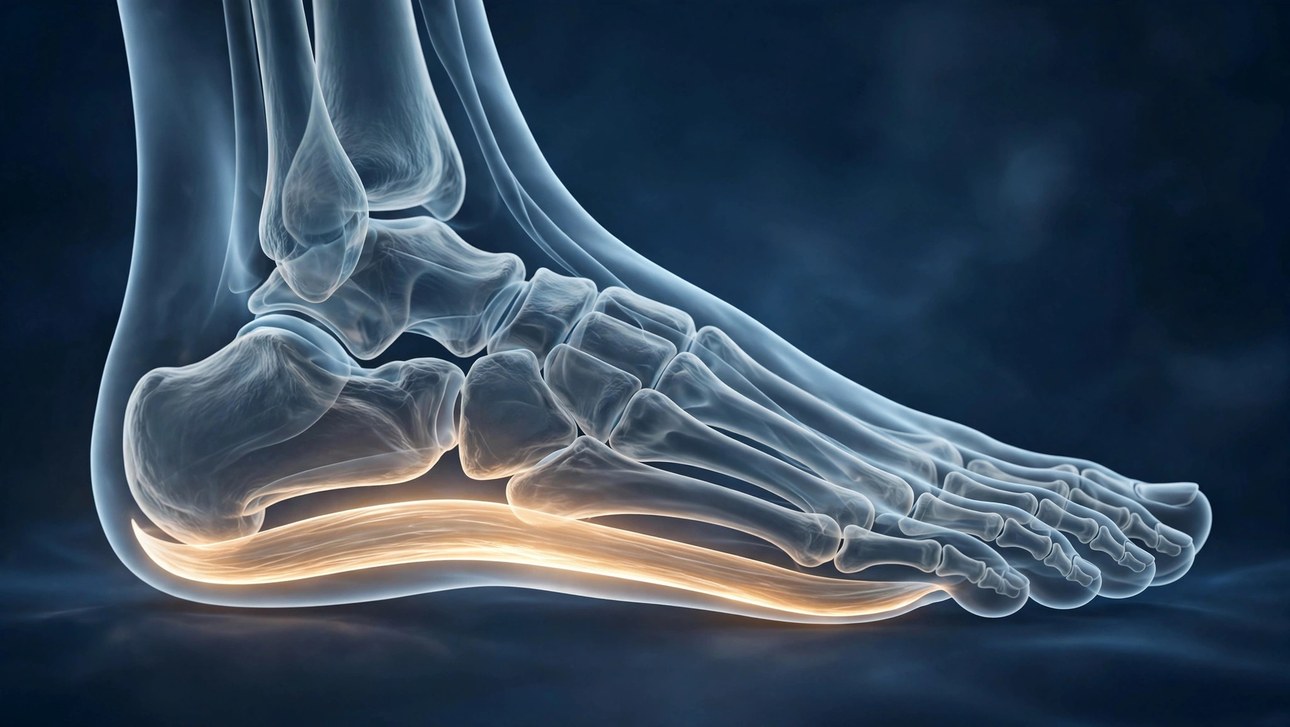
One rolled ankle can echo for years
You know the story: you stepped off a curb or landed wrong at sports, the ankle swelled, you iced it, rested it — and in a few weeks it "healed". Except it never quite came back. It feels stiffer than the other side, swells a little by evening, and every so often it rolls again, as if it no longer trusts the ground.
Here's what osteopathy sees: a sprain is not only torn fibres in a ligament. The small joints of the foot and ankle lose a bit of their glide, the fibula — the thin bone alongside the shin — can sit slightly off, and the calf muscles stay guarded long after the swelling is gone. Then the chain above adapts: the knee turns in a little, the hip works differently, and months later it's the knee or the lower back that starts aching. Treating only the ankle is like patching a crack without checking the foundation — we look at the whole chain.
Written by Dmytro Lozko, osteopathic practitioner at Classical Osteopathy Centre, Oakville. Member of ACMA (Alliance Canadienne de Médecine Alternative).
Early warning signs your ankle hasn't fully recovered
These are the quiet signs people live with for months, thinking they're normal. The ankle swells slightly by the end of the day, even without new injury. It gives way on uneven ground — trails, grass, cobblestones — while the other side feels solid. The first steps in the morning feel stiff, as if the joint needs to "warm up". Standing on one leg to put on a sock, you wobble on the sprained side and not on the other. And you catch yourself planning routes around stairs and curbs you used to take without thinking.
One more tell: look at your shoes. If one sole wears down differently, your gait has shifted to protect that ankle — and the knee and back are paying for it. Noticed two or three of these? That's not "a weak ankle you're stuck with" — those are early warning signs the recovery stopped halfway, and at this stage the body is still easiest to help. One safety note: after a fresh injury, if you can't put weight on the foot, the ankle looks deformed, or swelling and bruising are severe — see your healthcare provider first; a fracture has to be ruled out before any manual work.
How osteopathy may help after an ankle sprain — gently, without force
We start by assessing, not treating: how each small joint of the foot and ankle glides, where the fibula sits, how tight the calf and the tissues around the ankle remain, and how the knee and pelvis have reorganised around the injury. Then, gentle hands-on work aims to restore the lost glide in the ankle and foot, ease the guarded tissues, and free the fibula — no forcing, no cracking the joint into place.
Just as important is what happens above: if the knee and hip have spent months compensating, they need attention too, or they'll keep pulling the ankle back into its protected pattern. As the mechanics improve, simple balance work at home helps the ankle relearn trust in the ground. Osteopathy doesn't repair torn ligaments — but it may help the ankle move, bear weight and balance the way it did before the sprain.
Your first visit: what happens
Your first visit lasts 45 minutes — like every appointment — and there's no rush. First, a conversation: how the injury happened, how long ago, whether it has rolled since, what your days look like on your feet. Then — an observation: how you stand, how you walk, how each ankle moves. Next — a careful hands-on assessment: the joints of the foot and ankle, the tissues of the calves, and how the knees and pelvis respond. Please note: we do not diagnose medical conditions — we assess the state of soft tissues and mobility to understand what to work with using our hands. And already at the first meeting you get a clear plan: what we saw, what we'll work on, and how many visits it will most likely take.
How many visits will you need?
It depends on how old the sprain is and how much of the chain has reorganised around it. A recent, uncomplicated sprain may settle in a few visits; an ankle that has been "almost fine" for a year usually needs a course of several visits spaced one to two weeks apart — the body needs time to adjust between sessions. Some people notice the first changes after 2–3 visits: less evening swelling, a steadier step on uneven ground, easier first steps in the morning. But results are individual — we don't promise miracles in one session and we don't guarantee timelines. We promise careful, consistent work with the whole chain, and honesty: if we see the situation needs a doctor, we'll say so directly.
Visit us in Oakville
If your ankle still doesn't feel like yours months after a sprain — don't wait until the knee joins the conversation. Come in: we'll look at the whole chain and make a plan.
Frequently asked questions
My sprain was months ago — is it too late to do anything?
Usually not. The swelling is long gone, but the stiffness, the guarded tissues and the compensation pattern can stay for years — and those are exactly what manual work addresses. An old sprain often responds more slowly than a fresh one, but it does respond.
Why does my ankle keep rolling?
After a sprain, the ligaments' position sensors and the small joints' glide don't always come back fully, so the ankle reacts a split-second late on uneven ground — and rolls again. Restoring mobility and retraining balance may help break that cycle.
Do I need an X-ray or a brace?
We don't diagnose or prescribe imaging. If your injury is fresh, you can't bear weight, or something looks off, we'll tell you directly to see your healthcare provider first. A brace can support sport in the early weeks, but it doesn't restore the joint's own mobility and balance.
How long is an appointment and how much does it cost?
Every appointment lasts 45 minutes and costs $140 CAD. First and follow-up visits cost the same.
Related concerns:
Foot & heel pain · Knee pain
Last updated: November 2026.
Book your visit
Classical Osteopathy Centre
235 Lakeshore Rd E, Unit 202, Oakville, ON L6J 1H7
+1 289-885-4210
To book, go online or call us at +1 289-885-4210 — whichever suits you. Every appointment lasts 45 minutes.
Osteopathic care is a complementary manual practice and is not a substitute for medical diagnosis or treatment. Please consult your healthcare provider about any medical condition.