Osteopathic Care for TMJ and Jaw Pain in Oakville
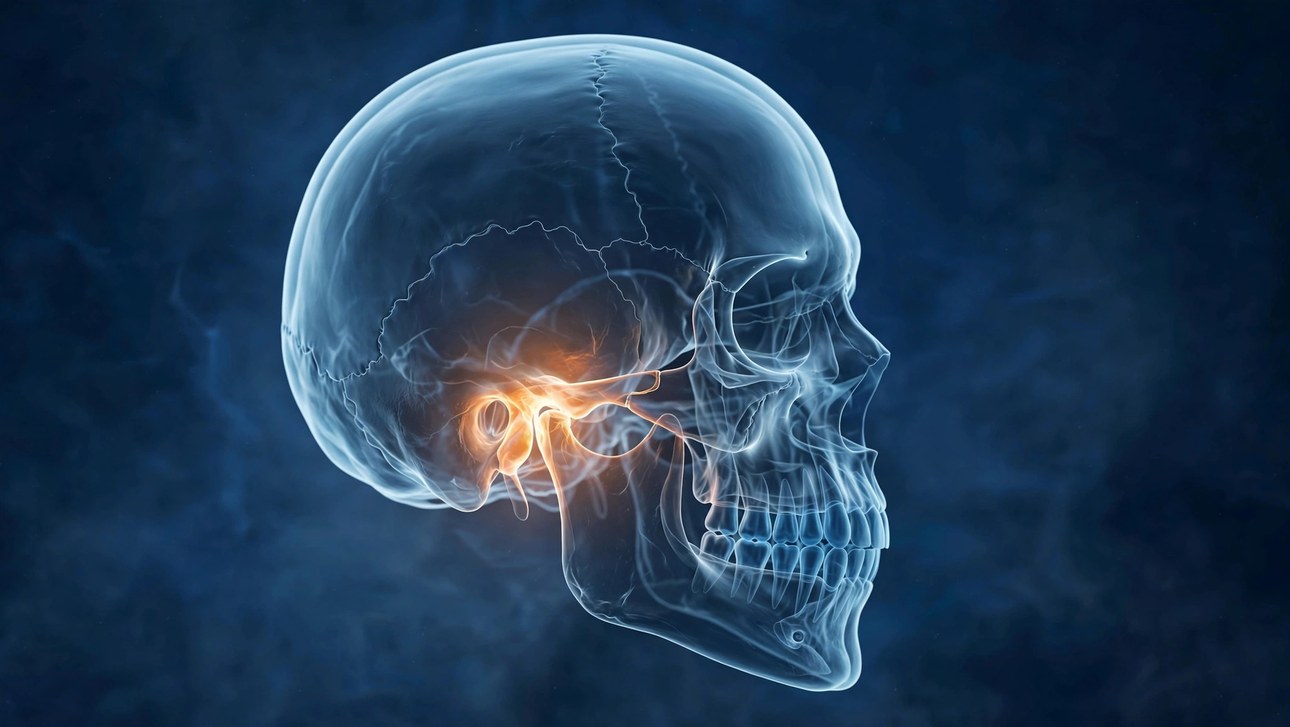
That click in your jaw isn’t “just stress”
From an osteopathic perspective, jaw pain is rarely just about the jaw: the temporomandibular joint works as part of a chain that includes the upper neck, the base of the skull and your whole posture. When any link of that chain loses mobility or holds tension, the jaw — one of the most-used joints in the body — often shows it first.
According to the U.S. National Institute of Dental and Craniofacial Research (NIDCR), an estimated 5%–10% of the U.S. population has some form of temporomandibular disorder (TMD), and these conditions are twice as common in women as in men.
You know the story: your jaw clicks when you yawn — loudly enough that people turn. By evening your temples ache. You wake up with a tight, tired jaw, and your dentist mentions worn teeth — “you grind them at night”. That is bruxism, and it usually has a partner: jaw pain. Chewing a steak feels like a workout. The ache radiates toward the ear, the neck stiffens, and headaches show up like clockwork. Stress, dental work, hours at the computer with your head jutting forward — the jaw quietly absorbs it all. If you’ve been told “it’s nothing, just stress” while the clicking gets louder and the mornings get sorer — trust the body. The jaw is a joint too, and it deserves the same care as any other.
Written by Dmytro Lozko, osteopathic practitioner at Classical Osteopathy Centre, Oakville. Member of ACMA (Alliance Canadienne de Médecine Alternative).
Early warning signs your body sends
The jaw usually whispers before it shouts. Clicking or popping when you open your mouth. Tiredness after chewing gum or a bagel. Morning tightness that fades by lunch. A feeling of fullness in the ear. Headaches starting from the temples. Tension creeping up into the neck and shoulders. These are early warning signs — not a reason to panic, but worth listening to. At this stage the muscles haven’t yet “forgotten” how to relax, and the body is easiest to help.
If your jaw clicks when you eat or aches by the end of the day, our guide why does my jaw click and hurt walks through the six most common causes and a 10-second self-check you can do at home.
How classical osteopathy may help with jaw pain
Our osteopathic teachers give a simple rule: with neck pain, headaches or dizziness, always check the jaw — it is one of the most commonly missed causes. The jaw joint sits in the temporal bone, right next to the middle ear — which explains why jaw tension can echo into the ear and into headaches. During a visit we assess the masticatory muscles, the jaw’s movement and the surrounding structures, then work gently: a slow release of the jaw muscles (a sudden release gives a “rubber band effect” — the spasm snaps right back), careful decompression, and always symmetric work on both sides, because releasing one side while the other stays stiff only moves the problem. This may help reduce tension in the jaw muscles, support freer jaw movement and ease the pull that travels up into the temples and neck. We make no promises of cures — and if teeth or the bite are the main issue, your dentist stays on the team. Visits are led by osteopaths Dmytro and Natalia.
What your first 45-minute visit looks like
Your first visit lasts 45 minutes — like every appointment — and there’s no rush. First, a conversation: when the clicking or pain started, whether you grind your teeth, what your days and nights look like. Then — an observation: how the jaw moves, how the head and neck hold themselves. Next — a careful hands-on assessment: the masticatory muscles, the jaw joint’s movement, the surrounding tissues — where they are tense, where movement is limited. Please note: we do not diagnose medical conditions — we assess the state of soft tissues and mobility to understand what to work with using our hands. And already at the first meeting you get a clear plan: what we saw, what we’ll work on, and how many visits it will most likely take.
How many visits will you need?
The honest answer: it depends on how long the jaw has been tense and whether grinding is part of the nightly routine. Recent clicking usually eases faster than a clenching habit years in the making. Most often it’s a course of several visits spaced one to two weeks apart — the body needs time to adjust between sessions. Some people notice the first changes after 2–3 visits: a calmer jaw in the morning, fewer temple headaches, easier chewing. But results are individual — we don’t promise miracles in one session and we don’t guarantee timelines. We promise careful, consistent work with the cause, and honesty: if we see the situation needs a doctor or a dentist, we’ll say so directly.
Visit us in Oakville
If your jaw clicks, clenches or aches — don’t wait until the headaches become your normal. Come in: we’ll look at where the tension is coming from and make a plan.
Frequently asked questions
What causes TMJ jaw pain?
Most often a combination of clenching or grinding, stress-related muscle tension, neck and upper-back stiffness, posture, and sometimes past dental work or injury. An osteopathic assessment looks at the whole chain — jaw, neck, and shoulders — rather than only the joint itself.
Can osteopathy help with jaw clicking?
It may help. Clicking is often linked to muscle tension and how the joint moves, and gentle hands-on work aims to ease that tension and improve jaw mechanics. Not every click needs treatment — and we will tell you honestly if yours does not.
Is osteopathic jaw treatment painful?
No. The work is gentle and adjusted to your comfort at all times. Many people find the release of jaw and neck tension deeply relaxing.
How much does an appointment cost, and how long is it?
Every appointment lasts 45 minutes and costs $140 CAD. First and follow-up visits cost the same.
What if my main problem is jaw pain when I chew? Pain on chewing usually means the joint and the chewing muscles are working unevenly — one side does more, opens less freely, or the bite lands asymmetrically. We assess how the jaw opens, whether it deviates to one side, and how the neck and the skull bones move with it; gentle treatment works with those mechanics and may ease the load on the painful side.
I clench my teeth at night. Can that be helped? Night clenching itself is driven by the nervous system, but its consequences — overloaded jaw muscles, a sore jaw in the morning, temple headaches, worn teeth — are mechanical, and that is where gentle osteopathic work may help. If we notice signs of significant tooth wear, we'll also suggest discussing a night guard with your dentist; the two approaches combine well.
Last updated: October 2026.
Book your visit
Classical Osteopathy Centre
235 Lakeshore Rd E, Unit 202, Oakville, ON L6J 1H7
+1 289-885-4210
To book, go online or call us at +1 289-885-4210 — whichever suits you. Every appointment lasts 45 minutes.
Osteopathic care is a complementary manual practice and is not a substitute for medical diagnosis or treatment. Please consult your healthcare provider about any medical condition.